9 February 2026 | Waterford, Ireland
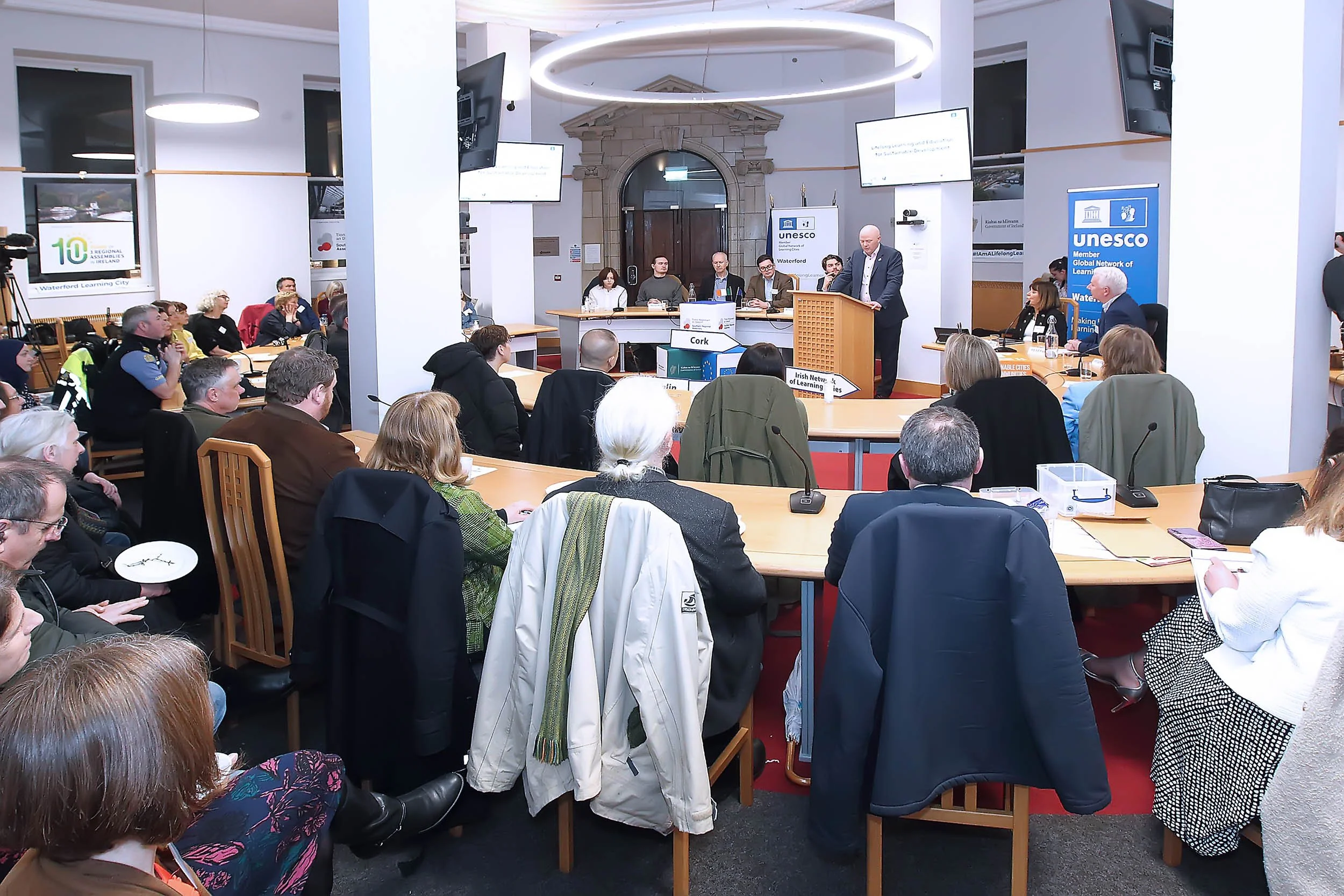
Waterford UNESCO Learning City hosted a Shared Island exchange bringing together representatives of the Irish Network of Learning Cities to explore the connections between lifelong learning, Education for Sustainable Development (ESD), and community-led sustainable development.
The programme provided an opportunity for delegates to share experiences, explore innovative approaches to embedding sustainability within education, and consider how learning cities can support the implementation of the United Nations Sustainable Development Goals (SDGs).
The exchange highlighted Waterford's growing role as a UNESCO Learning City and demonstrated the importance of partnerships between higher education, local government, education and training providers, and local communities in creating inclusive lifelong learning opportunities.
Embedding Education for Sustainable Development
The programme commenced at Assembly House with a mayoral reception and an introduction to Education for Sustainable Development. Juergen Bauer, Department of Architecture and the Built Environment at South East Technological University (SETU), subsequently explored approaches to embedding ESD within learning and education. SETU has been an active member in SDSN Ireland
Discussions considered how sustainability can be integrated into educational settings and everyday learning, equipping individuals and communities with the knowledge and capabilities to respond to interconnected environmental, social, and economic challenges.
A walking tour of Waterford city centre provided an opportunity to explore sustainable development through the urban environment, connecting educational themes with the city's heritage, public spaces, and wider development priorities.
Learning Neighbourhoods: Putting Communities at the Centre
A particular highlight was a resident-led visit to The Parish, Waterford's first UNESCO Learning Neighbourhood, located in the Larchville/Lisduggan area.
The initiative demonstrates how lifelong learning can be supported beyond formal educational institutions by connecting residents, community organisations, and local partners around shared interests and opportunities. The neighbourhood approach places particular emphasis on community participation, strengthening local connections, and improving access to learning.
Waterford's development as a UNESCO Learning City is underpinned by collaboration between SETU, Waterford City and County Council, Waterford and Wexford Education and Training Board, and regional partners. Its wider ambition is to strengthen lifelong learning across the city and contribute to a more connected Learning Region for the south-east.
The visit to The Parish provided delegates with an opportunity to see how these ambitions are being translated into practical, community-led initiatives.
Shared Island Knowledge Exchange: Opportunities for ESD
The programme concluded at SETU's West Campus with a participatory World Café workshop, bringing together delegates from across the Irish Network of Learning Cities for peer-to-peer knowledge exchange.
SDSN Ireland Manager Dr John Barimo led a facilitated discussion as part of the knowledge exchange, exploring the challenges and opportunities associated with advancing Education for Sustainable Development within cities and communities. The discussion considered how learning institutions, local authorities, and community organisations can work together to make sustainability learning more accessible, relevant, and action-oriented.
The workshop also highlighted the value of sharing experiences across the island, identifying common challenges and opportunities for collaboration while recognising the different contexts in which individual learning cities operate.
Strengthening Partnerships for Lifelong Learning and Sustainable Development
The Shared Island exchange reinforced the importance of lifelong learning as an enabler of sustainable development. Learning cities provide an important platform for connecting formal education with community knowledge, local priorities, and opportunities for practical action.
For SDSN Ireland, participation in the exchange reflects its commitment to advancing ESD through collaboration, professional learning, and the sharing of good practice. It also reinforces the wider importance of North–South cooperation in strengthening partnerships and accelerating progress towards the SDGs.
Waterford's experience demonstrates how universities, local authorities, education providers, and communities can work together to create learning opportunities that extend across all stages of life.
Ultimately, the exchange highlighted that sustainable development is not simply something to be taught within educational institutions; it is a shared learning process involving the places where people live, work, and participate in their communities.