Arts, Climate Science and Community Creativity Converge in Cork
Cork, 5 December 2025
A vibrant thought provoking programme on Arts & Sustainability brought artists, researchers, climate scientists, makers and community members together at Horgans Quay 1 in Cork City. The atmosphere was warm, curious and genuinely collaborative, with participants exploring how creativity might help us understand climate change differently and how shared joy can sustain us at a time when the future feels uncertain.
UCC President Prof. John O’Halloran opened the event with a welcome that set the tone beautifully, inviting us to see artists not as translators of climate science but as co-thinkers and co-makers in imagining climate futures and for all academic disciplines to work together with mutual respect and humility.
Programme Highlights
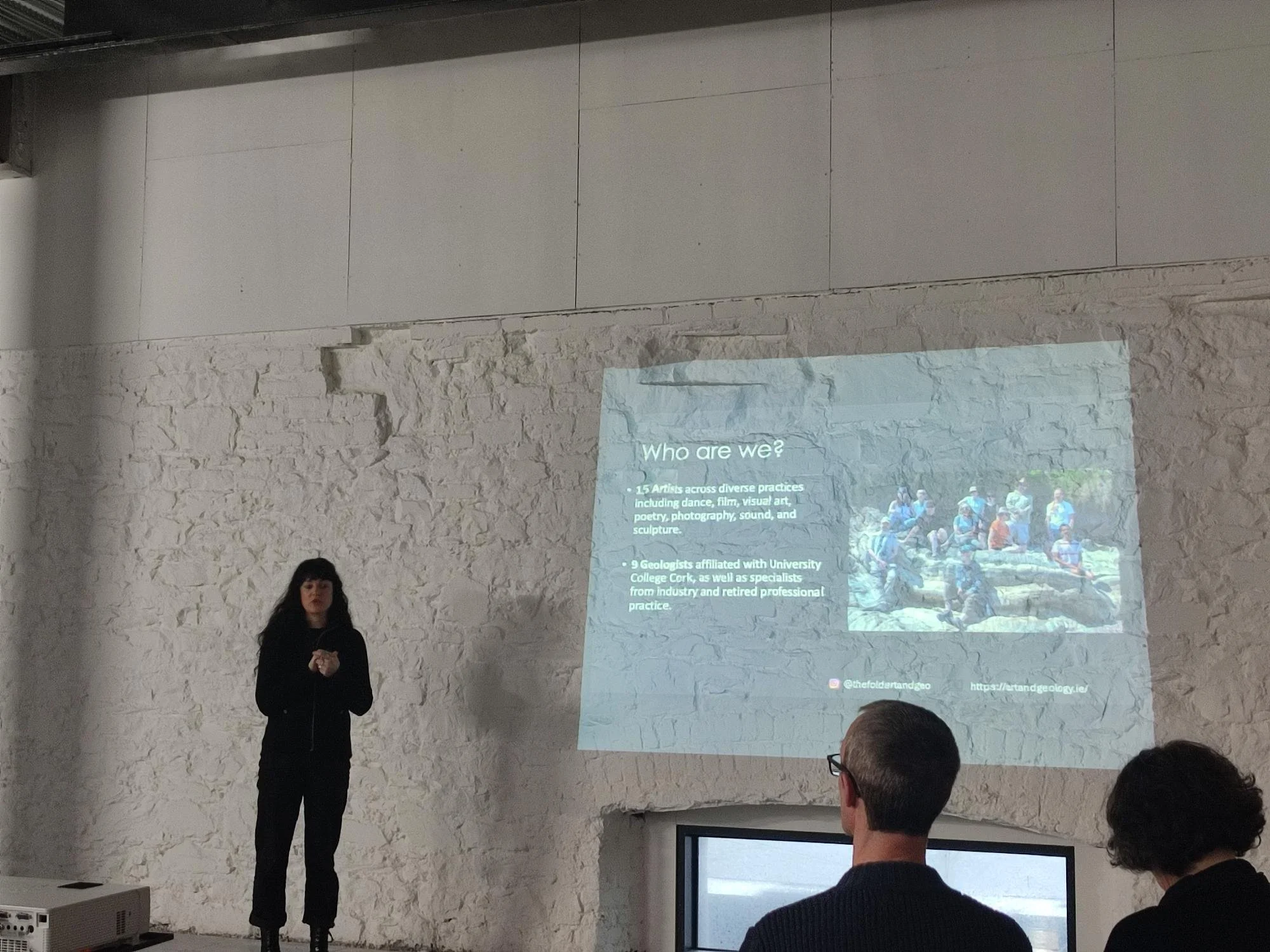
The morning began with Aoife Desmond (Test Site), Jess Franklin (The Fold / Art & Geology), and Zoë Rush (Patio Collective), who reflected on how artistic fieldwork, site-specific inquiry and collaborative practice open up new ways of telling climate stories.
Later, Julie Forrester (Gleann a’Phuca) and Marilyn Lennon (The Kinship Project) shared work grounded in local ecologies, caring networks and the forms of making that emerge when community and environment are considered inseparable, and even create new language that was incorporated by the local city council.
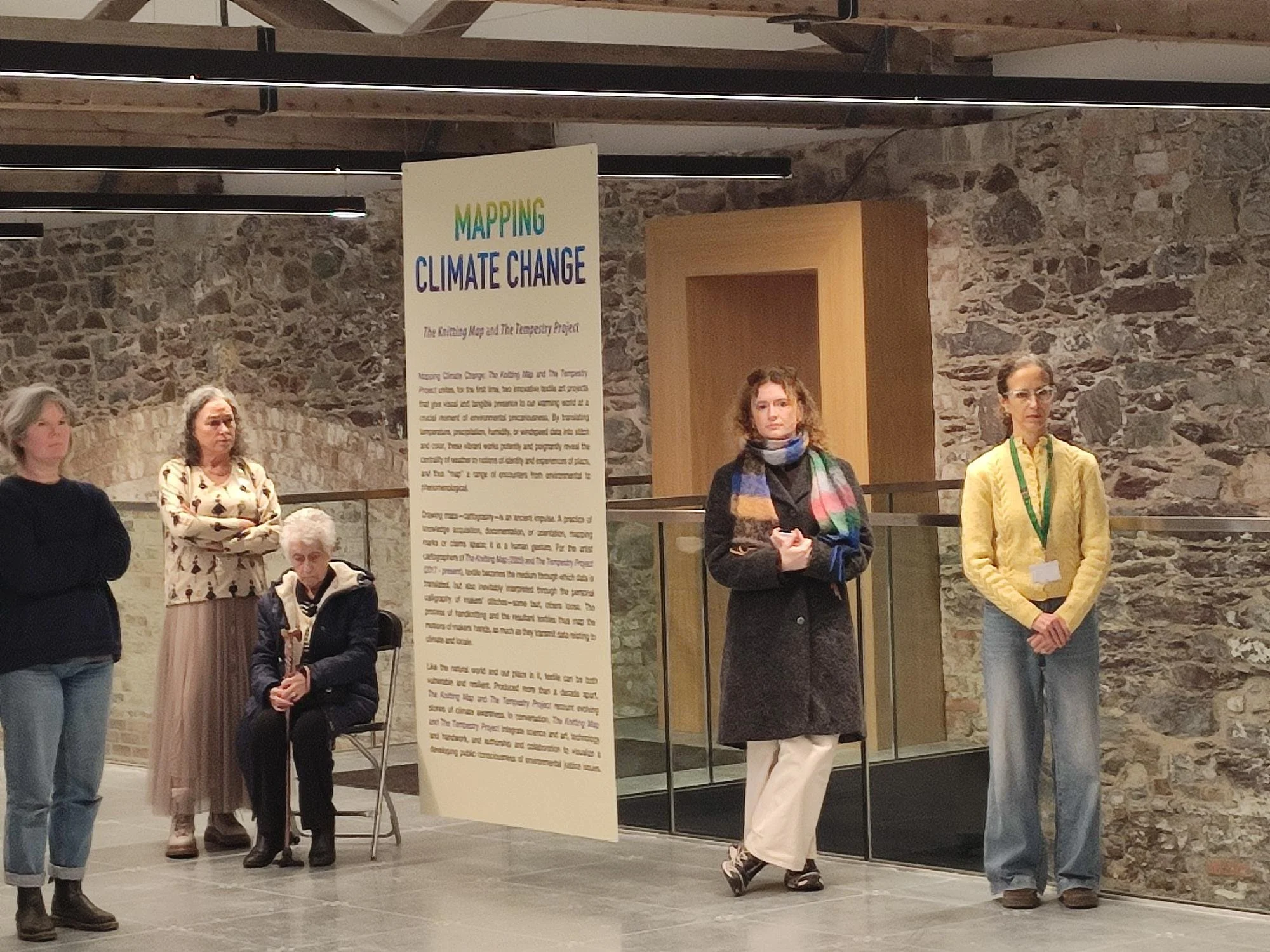
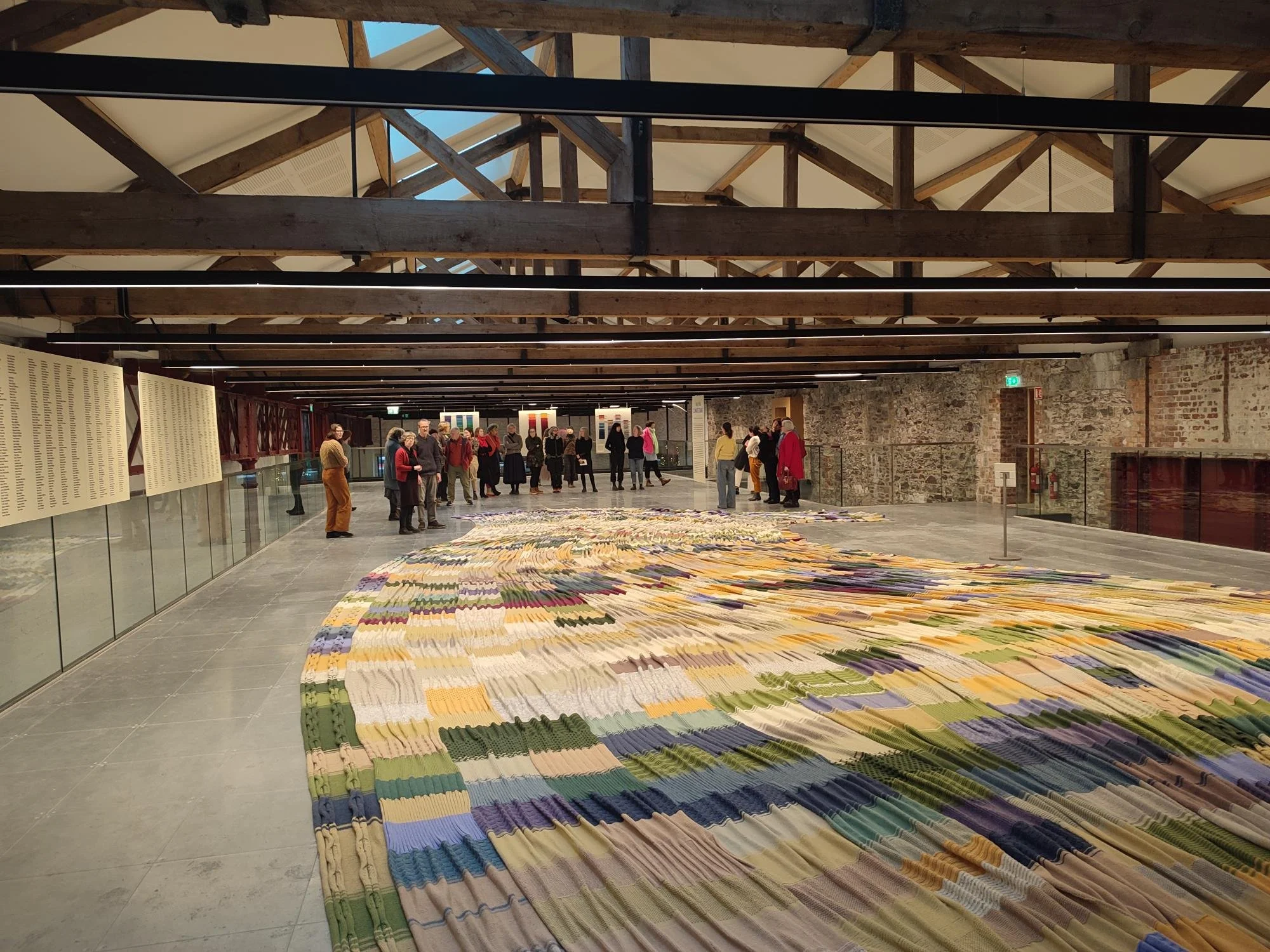
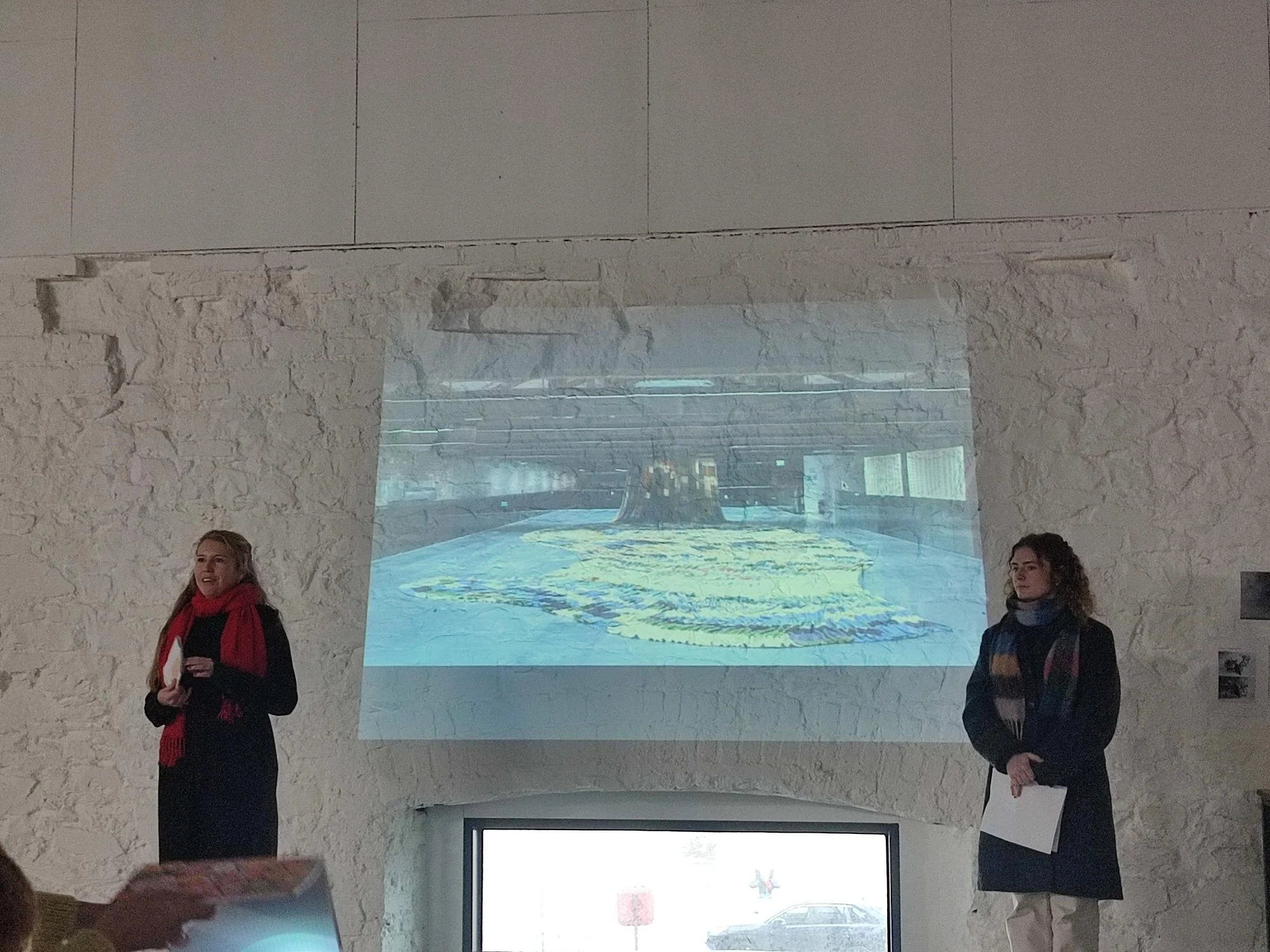
Prof. Jools Gilson and Curator Deborah Barkun, joined by knitters Marion O’Sullivan and Susan Sands, offered a lively introduction to the forthcoming Mapping Climate Change exhibition featuring The Knitting Map and The Tempestry Project. Their conversation revealed textiles not simply as decorative objects but as archives and repositorues holding memory, weather, pattern, labour and community within each and every fiber.
Textile Climate Memory
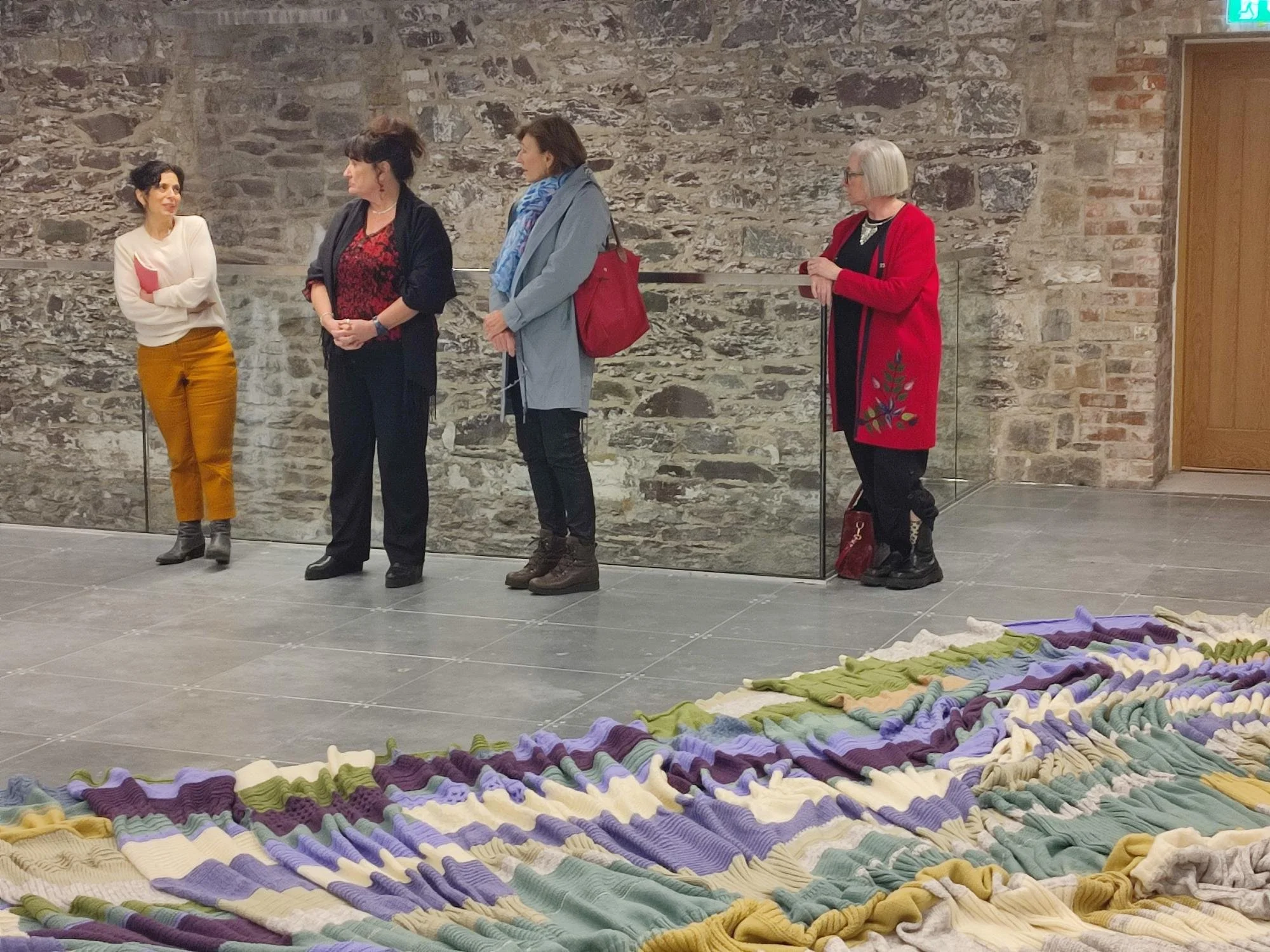
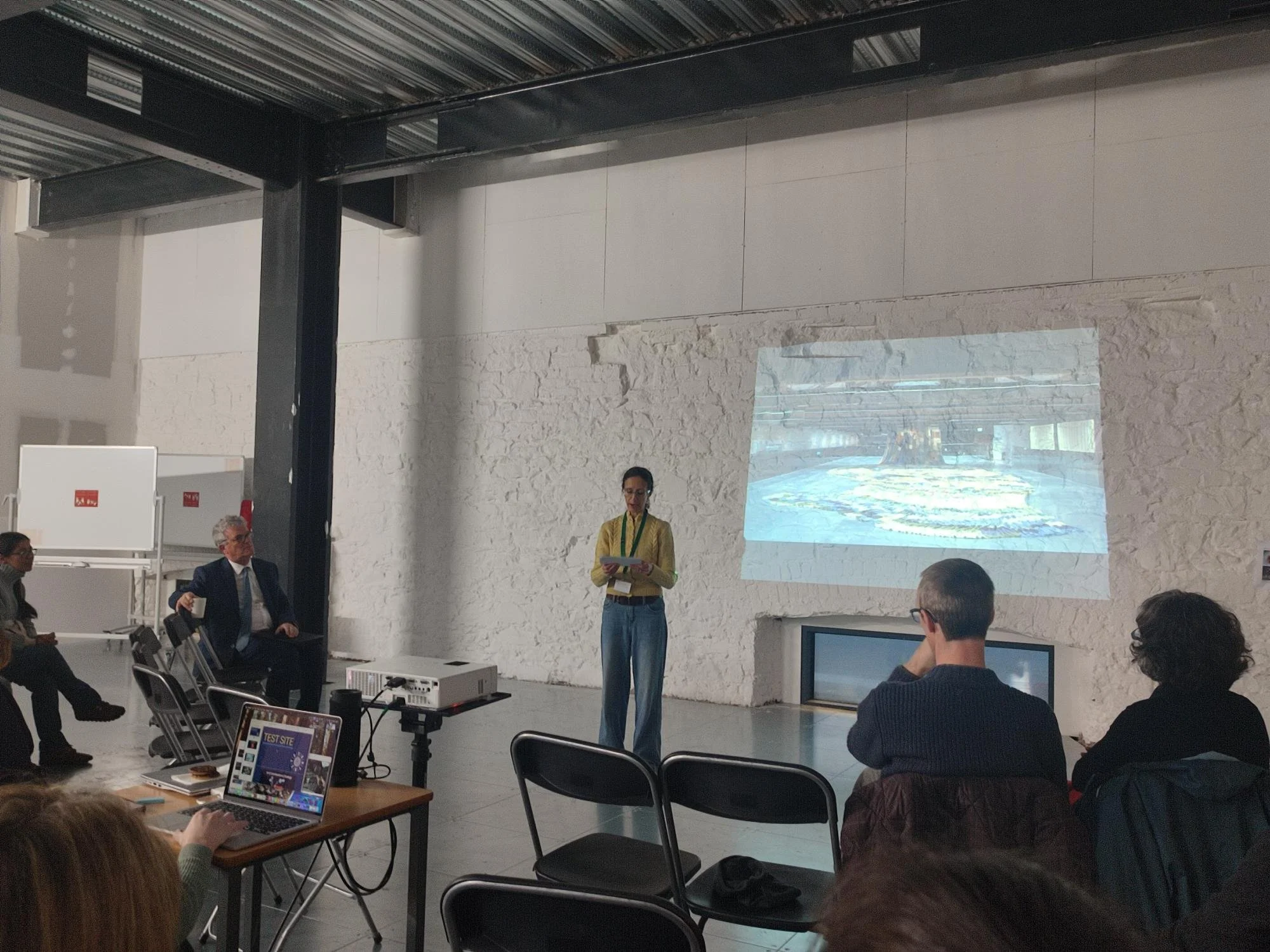
A special focus of the day was the 20th anniversary of The Knitting Map, first created in 2005 by more than 2,000 women across Cork during the European City of Culture. The installation of the Knitting Map was stunning in it enormous scale as it appeared to cascade down from the exposed roof trusses and flowed across an industrial floor. During the creation of the Knitting Map, each day’s weather shaped the colours and stitches, turning meteorological data into a tacid history of the city. Climate was transposed by hand, through knitting skill often dismissed as ordinary yet fast becoming a lost skill.
Presented alongside The Tempestry Project, which similarly transforms climate data into textile form, the exhibition creates a narrative testimony but also offers the potential for a transformative encounter. These works captured climate not only as information, but as shared experience of texture, colour and emotion.
Looking Ahead
What emerged throughout the day was clear: sustainability is not just an issue requiring financial, policy or technology fixes. It is also needs cultural, relational and deeply creative solutions. This expansive dialogue in Cork signalled real enthusiasm for an annual Arts & Sustainability gathering, one that could offer space to collaborate, experiment and imagine together.
SDSN Ireland is excited to support and follow the momentum created by this event, including the rich conversations, partnerships and creative climate futures it promises to inspire.