National SDG Stakeholder Forum 2025 – “SDG Localisation: SDGs Working Locally”
2 December 2025 —University College Cork (UCC) & online
Forum highlights
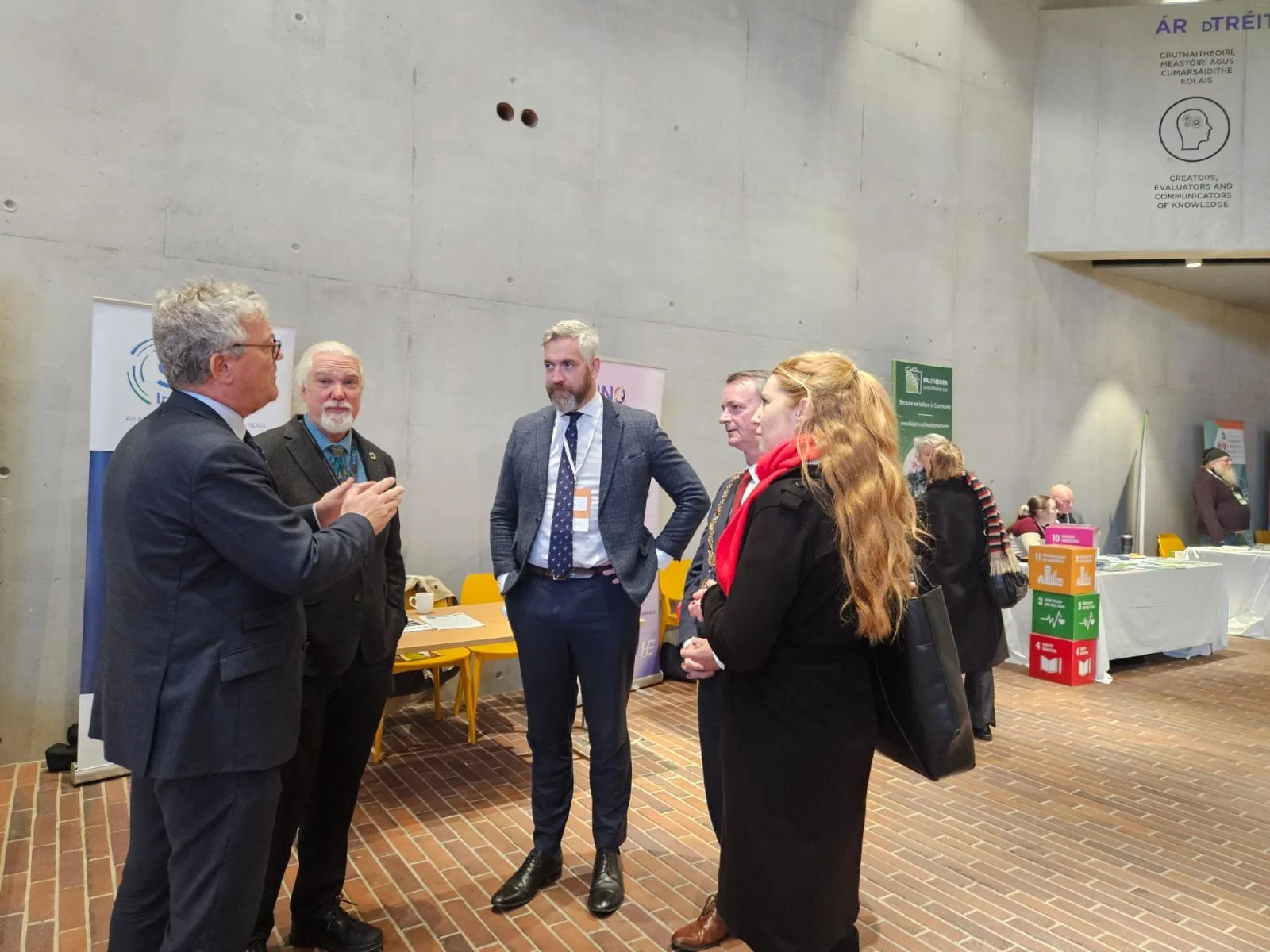
On Tuesday 2 December, SDSN Ireland and University College Cork supported the 2nd National SDG Stakeholder Forum of 2025 under the banner “SDG Localisation – SDGs Working Locally”. This hybrid event, hosted the Government of Ireland’s Department of Climate, Energy and Environment, brought together policymakers, academics, community stakeholders and civil society from across Ireland with a shared focus: how to turn global ambitions into real local impact.
The day of presentations, panel discussions and interactive workshops underscored the urgent need to root the 2030 Agenda for Sustainable Development in local communities — putting the “global” into locally meaningful action.
Opening remarks: a call to local action
The Forum opened with remarks from Councillor Fergal Dennehy, Lord Mayor of Cork, who emphasised that “it's in our cities, towns and communities where the SDGs truly come alive.” His words set the tone for a day dedicated to local ownership of the SDGs. The Lord Mayor also spoke of his commitment to a Voluntary Local Review on SDG progress while at a global meeting of mayors in Geneva, Switzerland.
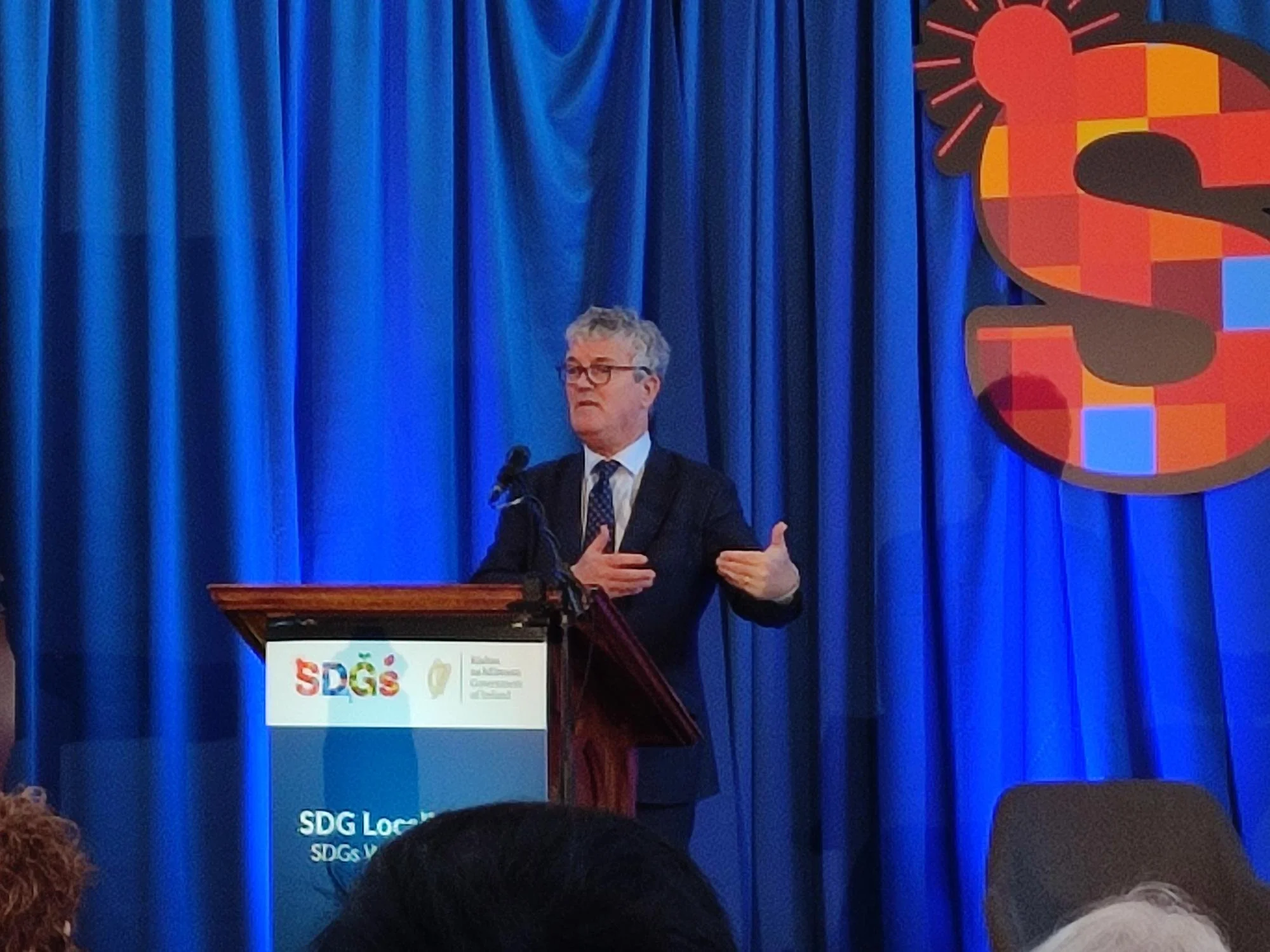
In welcoming participants, UCC President and SDSN Ireland Co-Chair John O'Halloran acknowledged the significance of hosting the Forum outside Dublin and for the first time, at a university. He went on to reflect on the deep-rooted commitment at UCC to sustainability where “We are very proud to be consistently recognised as one of the most sustainable universities in the world, and Research and Innovation have been key success enablers of our sustainability journey.”
Underlining this commitment, Prof. O’Halloran noted “The 2030 Agenda and the SDGs inform all dimensions of the university’s operations — from research and teaching to external engagement and campus operations where our campus acts as a living laboratory”
Prof. O’Halloran added that “When we consider the many challenges we face, including the climate and biodiversity crises, it is clear that we all need to be ambitious and resolute, in order to maximise our impacts to advance sustainability.” Concluding his remarks, he invited attendees to consider “what value you find in the SDGs for envisioning a sustainable future and realising the ‘global’ in our local actions, and how we can make the SDGs more relevant to the lives of all people in Ireland.”
Mars is not a suitable option!
An inspiring keynote address was given by Niamh Shaw, an Irish scientist, engineer, STEM communicator, writer, and performer. She highlight her 2017 experience as was part of a crew training in a simulated Mars mission at the Mars Desert Research Station in southern Utah as the artist and journalist. Her talkaway message was that no matter how bad things are on Earth, it’s still a much more viable home for humanity than Mars so it is imperative for us to take better care of our home on Earth.
National policy in focus: new Implementation Plan & ecosystem protection
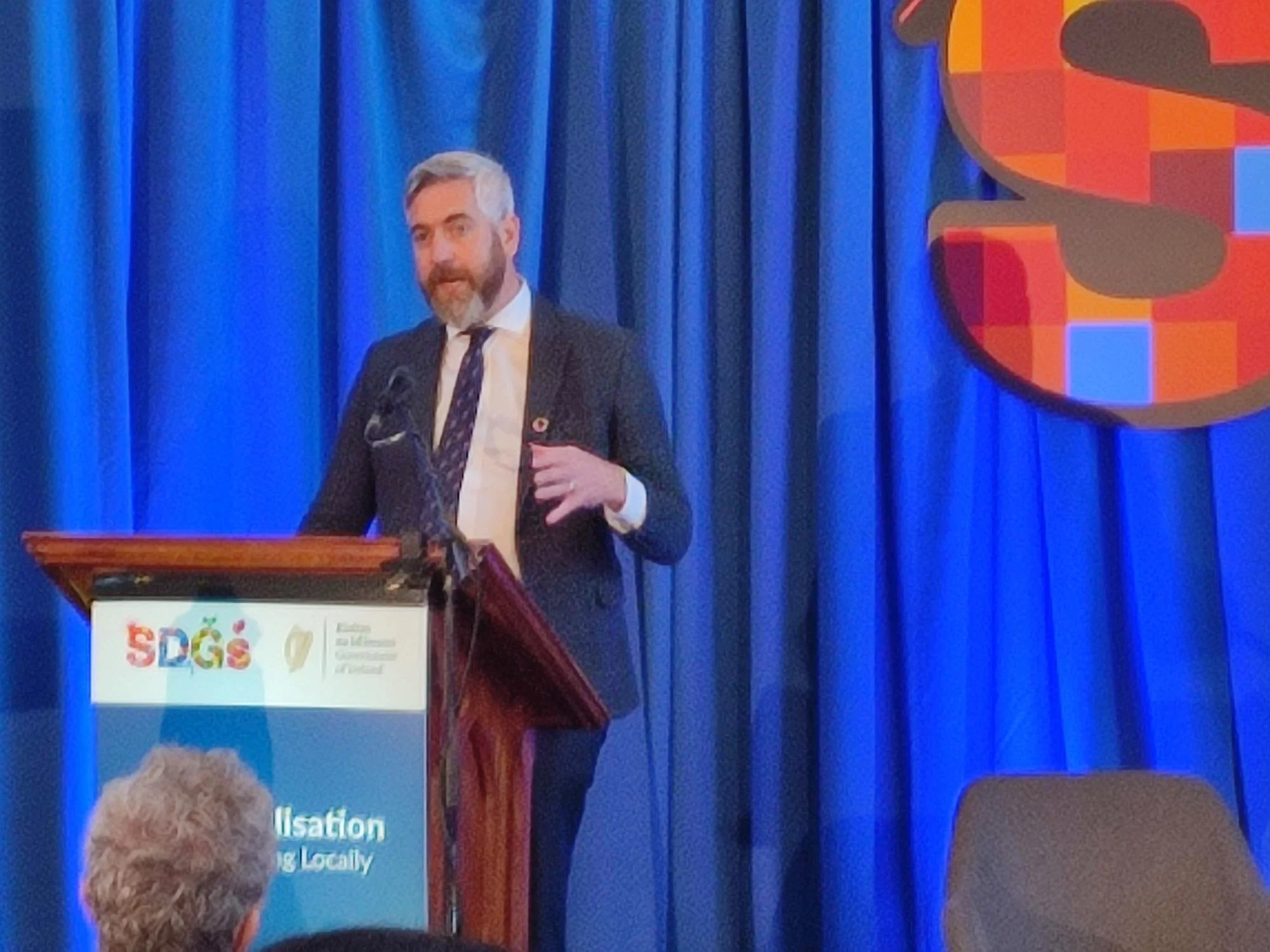
A key announcement came from Minister Christopher O'Sullivan, who opened the consultation for the upcoming 3rd National SDG Implementation Plan. The new plan — now under public consultation — underlines the importance of local communities in SDG implementation, with a particular emphasis on protecting vital ecosystems such as seagrasses and streams. This focus underlines how national policy and local action can intersect to safeguard Ireland’s natural heritage while advancing sustainable development goals.
Workshops — translating SDGs into local practice
Participants chose from one of four workshops, each designed to tackle a different dimension of SDG localisation:
Communicating the SDGs – Bringing the message home
Focus on how to cut through information overload and make the SDGs relevant and compelling in community-level communication.Synergies for Success – Identifying potential for community collaboration
Exploring ways for local actors — NGOs, community groups, businesses, local authorities — to work together on SDG-aligned initiatives in Cork and beyond.Localising the SDGs – Charting Ireland’s path to Voluntary Local Reviews (VLRs)
A deep-dive into what it would take for Irish local authorities to begin conducting VLRs — the tool used worldwide for cities and regions to self-assess SDG progress.Healthy Cities – Urban living in an SDG-informed world
Discussions around urban gardening, sustainable food production, and urban design — exploring how sustainable living can be embedded in city life.
One workshop of particular note on Voluntary Local Reviews, delivered by SDSN Ireland Manager John Barimo and Rosa Rogers from UCC Digital Humanities, introduced a high resolution GIS-based mapping tool for tracking SDG progress at a highly localised level of 200-300 people. The tool draws on high-resolution data from Central Statistics Office (CSO) to give local authorities and communities the evidence base needed to track SDG progress in fine detail.
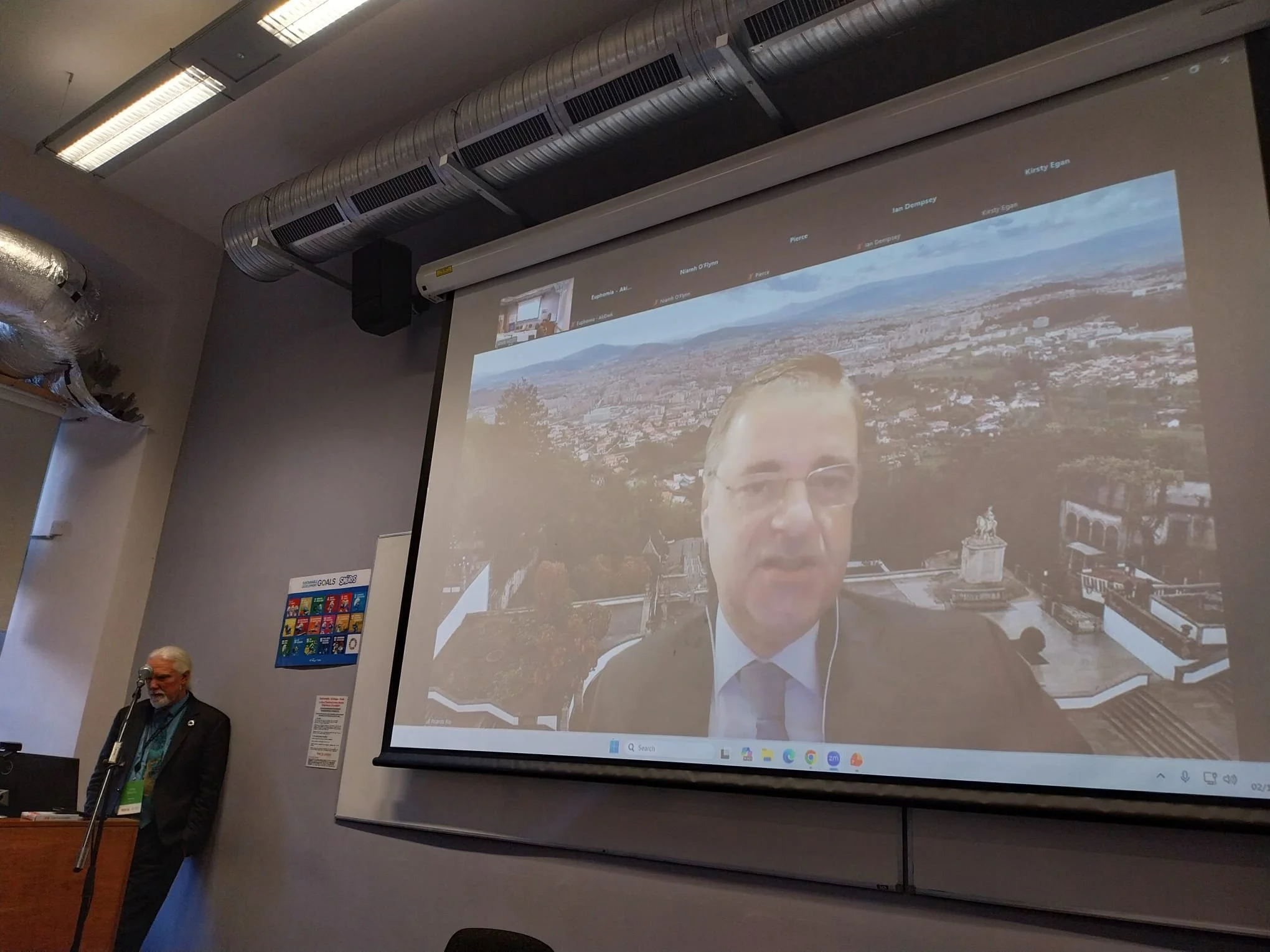
This workshop also featured a key intervention by Ricardo Rio, the former Mayor of Braga, Portugal. He provided deep insights into the challenges and benefits of conducting a VLR which included considerable engagement with various stakeholders in the community. This process created a shared understanding and ownership which elevated the significance of their VLR.
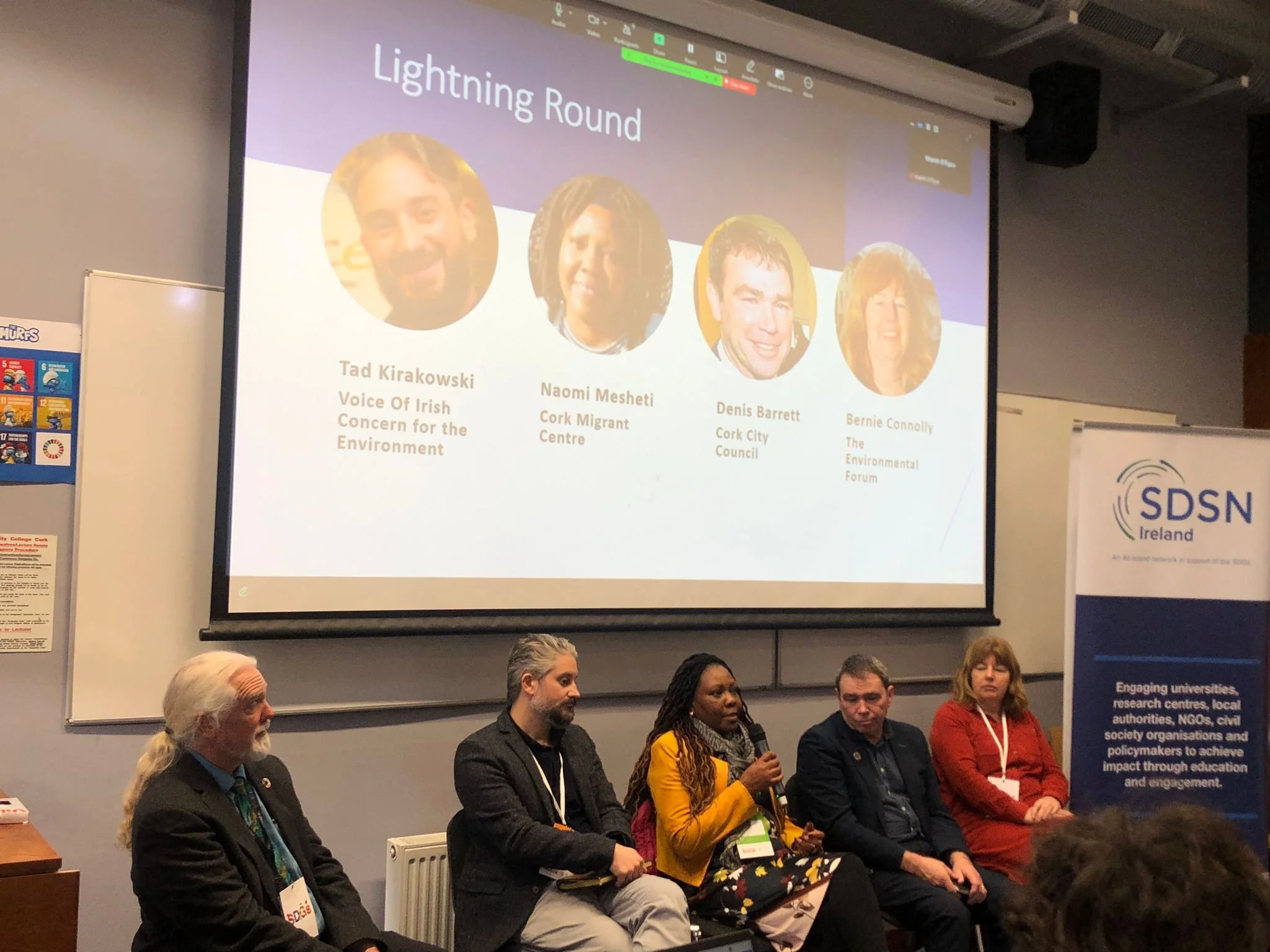
The workshop also featured a panel of guest speakers sharing real-world experiences: Bernie Connolly (The Environmental Forum), Denis Barrett (Cork City Council’s Learning Cities Coordinator), Tad Kirakowski (VOICE of Irish Concern for the Environment), and Naomi Masheti (Cork Migrant Centre).
Lunchtime Sound Bath & Networking
In a new and holistic touch, the Forum offered a 20-minute sound bath / sound meditation session at lunchtime — places were limited and allocated on a first-come, first-served basis. Lunch was provided to participants following the session. This wellness-inspired addition reflects a broader understanding that advancing sustainability also involves care for individual wellbeing and community resilience.
What’s next for SDSN Ireland & the SDG journey
As the Forum draws to a close, the momentum is clear. SDSN Ireland — as a North-South academic network founded by UCC and Queen's University Belfast (unsdsn.org) is well positioned to support local authorities, civil society and communities across Ireland to take concrete, data-informed action on the SDGs.
The introduction of the new National Implementation Plan consultation, combined with the practical tools introduced during the Forum (e.g., the GIS mapping platform), offers a promising pathway for embedding SDGs in local policy and community practice. As O’Halloran urged: it is time to bridge the “global” ambition of the 2030 Agenda with lived realities here on the island.
We look forward to seeing the ideas, collaborations, and ultimately local SDG impacts that emerge in the coming months.
For more information about SDSN Ireland or to sign up for future events, please visit sdsnireland.org.