October 2026 | Cork, Ireland
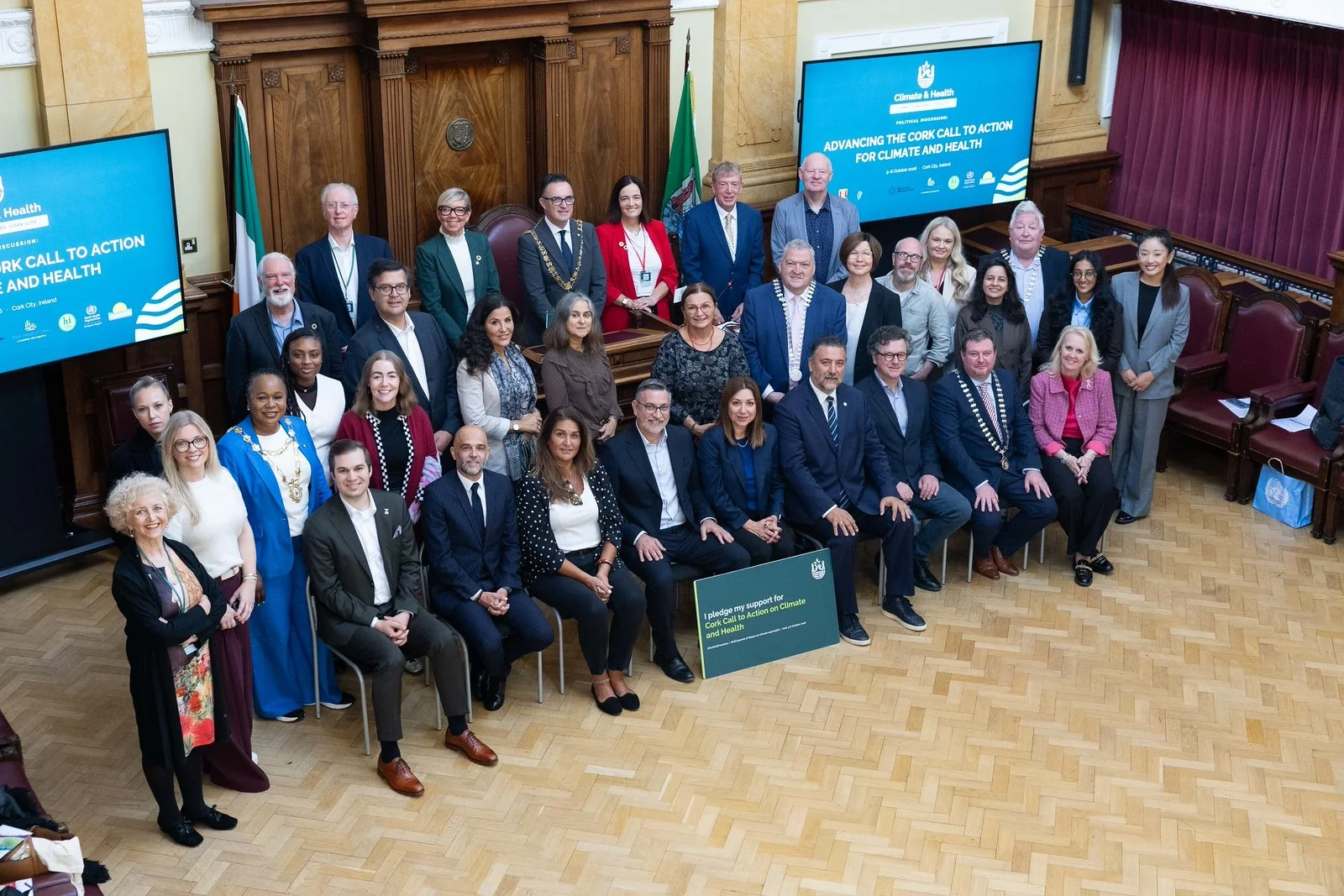
More than 100 mayors, deputy mayors and elected representatives from 60 cities across 22 European countries have signed the Cork Call to Action on Climate and Health, demonstrating growing political commitment to addressing the connected challenges of climate change, public health and sustainable urban development.
The commitments were agreed during the WHO Summit of Mayors on Climate and Health in Cork, hosted by Cork City Council and the WHO European Healthy Cities Network. The summit brought together political leaders to consider how cities can respond to the growing health impacts of climate change while building healthier, more resilient and equitable communities.
With Europe warming at approximately twice the global average, cities are increasingly on the front line of climate impacts — from extreme heat and flooding to poor air quality. They are also central to delivering practical solutions.
Five priorities for healthier, more resilient cities
The Cork Call to Action identifies five thematic priorities for local action:
Nature-positive cities: Protecting and restoring biodiversity, green and blue spaces, and advancing nature-based solutions.
Healthier and sustainable food systems: Supporting affordable, nutritious food, stronger local food economies and reduced food waste.
Active cities: Investing in walking, cycling and public transport.
Healthy homes: Improving housing quality, energy efficiency and access to affordable, healthy living conditions.
Resilience and preparedness: Strengthening community protection against extreme weather, flooding and heat.
Signatories also committed to placing health, equity and climate justice at the centre of local decision-making, ensuring that the benefits of climate action are shared across communities.
From political commitment to practical action
The summit was opened by An Taoiseach Micheál Martin, who reaffirmed Ireland’s support for local government leadership on climate and health. Katrín Jakobsdóttir, former Prime Minister of Iceland and Chair of the WHO Pan-European Commission on Climate and Health, delivered the keynote address and contributed to high-level political discussions alongside the Commission’s Chief Scientific Adviser and SDSN Global Leadership Council, Professor Sir Andy Haines.
The summit builds on Cork’s growing role in international climate and health leadership. As both a WHO-designated Healthy City and an EU Mission City working towards climate neutrality, Cork has been advancing initiatives that connect environmental sustainability with public wellbeing. These include a Sustainable Healthy Food Policy, investment in resilient public spaces and active travel, and measures to improve air quality.
UCC President and SDSN Ireland Co-Chair Professor John O’Halloran, who attended the summit, highlighted the important contribution universities can make in translating research and expertise into action through collaboration with cities, policymakers, health leaders and communities. He also emphasised the interconnectedness of human and planetary health and UCC’s continued collaborations with Cork City Council and partners locally and internationally. SDSN Ireland Deputy Co-Chair Brian O’Gallachoir also contributed to an expert panel discussion
The importance of collaboration
The Cork Call to Action reflects a shared understanding that climate and health challenges cannot be addressed in isolation. Progress requires integrated approaches that connect public health, housing, food systems, transport, biodiversity and climate resilience — supported by evidence, political leadership and meaningful community engagement.
This collaborative approach is closely aligned with SDSN Ireland’s commitment to advancing the UN Sustainable Development Goals through partnerships among universities, local authorities, NGOs, government and civil society. In particular, the commitments speak to the interconnected aims of SDG 3 (Good Health and Well-being), SDG 11 (Sustainable Cities and Communities) and SDG 13 (Climate Action).
The Cork declaration provides an important platform for continued cooperation among cities across Europe. It also reinforces the value of connecting research, policy and local experience to turn shared ambitions into practical action — helping build healthier, more inclusive and climate-resilient communities for current and future generations.