2 October 2026 | Dublin, Ireland
SDSN Ireland participated in the European Sustainable Development Network (ESDN) Conference 2026, held in Dublin on 2 October, under the theme Environmental Security in Europe: Building the Foundations for Long-Term Resilience. Organised by the ESDN in cooperation with Ireland's Department of Climate, Energy and the Environment, the conference was recognised as an Associated Event of Ireland's Presidency of the Council of the European Union 2026.
The conference brought together policymakers, researchers, civil society representatives, and sustainability practitioners from across Europe to examine how environmental and climate policy can contribute to resilience, security, and sustainable development in an increasingly uncertain global context.
With a programme of keynote presentations, interactive Exchange Spaces, and discussions on the future of the SDGs, the event provided an important opportunity to share national experiences, explore policy approaches, and strengthen European collaboration.
Environmental Security: A Foundation for European Resilience
Following opening remarks from ESDN President Elisabeth Freytag-Rigler and Ireland's Department of Climate, Energy and the Environment, the opening session explored how multilateral environmental and climate policy can strengthen resilience while supporting peace and security.
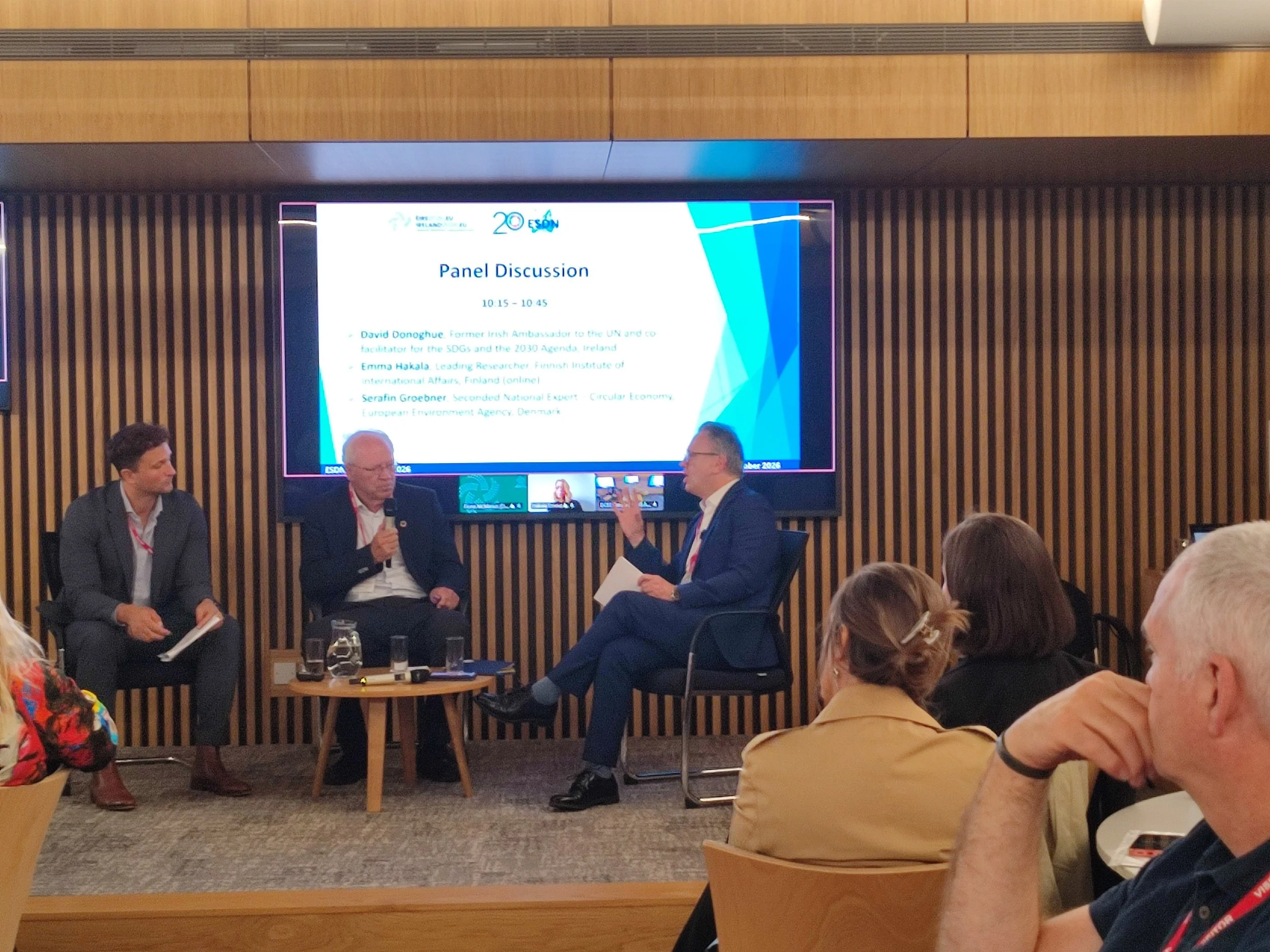
The keynote address was delivered by Ambassador David Donoghue, former Irish Ambassador to the United Nations, co-facilitator of the SDGs and 2030 Agenda, and Chair of the SDSN Ireland Executive Committee. His contribution highlighted the importance of international cooperation and multilateral approaches in addressing interconnected environmental, social, and geopolitical challenges.
Further contributions examined environmental crises as shared European security risks and considered how Europe can strengthen its resilience in an increasingly unstable world. The programme also featured Troy Armour, CEO and Founder of Junk Kouture, highlighting the contribution of creativity and innovation to sustainability.
Exchange Spaces: Building the Foundations for Long-Term Resilience
A central feature of the conference was two interactive Exchange Spaces, providing participants with opportunities to engage directly with European policy experts and practitioners. Discussions were organised around four interconnected themes:
Just and Green Transition: Exploring how climate action can deliver equitable outcomes, including approaches to just transition in agriculture, land use, energy, and national sustainable development strategies.
Circular Economy: Sharing national and regional strategies, governance approaches, stakeholder platforms, and digital tools to accelerate circular economic models.
Citizen and Stakeholder Engagement: Examining approaches to meaningful public participation, youth engagement, and the role of citizens in shaping long-term sustainability policies.
Environment, Climate and Biodiversity: Discussing climate adaptation, environmental communication, biodiversity protection, and the relationship between climate action, democracy, and resilience.
SDSN Ireland Manager John Barimo facilitated a discussion table during the second Exchange Space entitled Connecting Climate, Nature and Communities – Building Solutions Together. The session explored opportunities to better connect climate action, biodiversity, and community engagement through collaborative and place-based approaches.
Other discussions throughout the Exchange Spaces highlighted the importance of balancing national policy frameworks with locally grounded initiatives, ensuring that sustainability transitions are inclusive, evidence-informed, and responsive to the needs of communities.
The participation of youth representatives from across Europe also brought an important intergenerational perspective, reinforcing the need to include younger voices in shaping sustainability priorities and future policy frameworks.
Looking Ahead: The SDGs and the Post-2030 Agenda
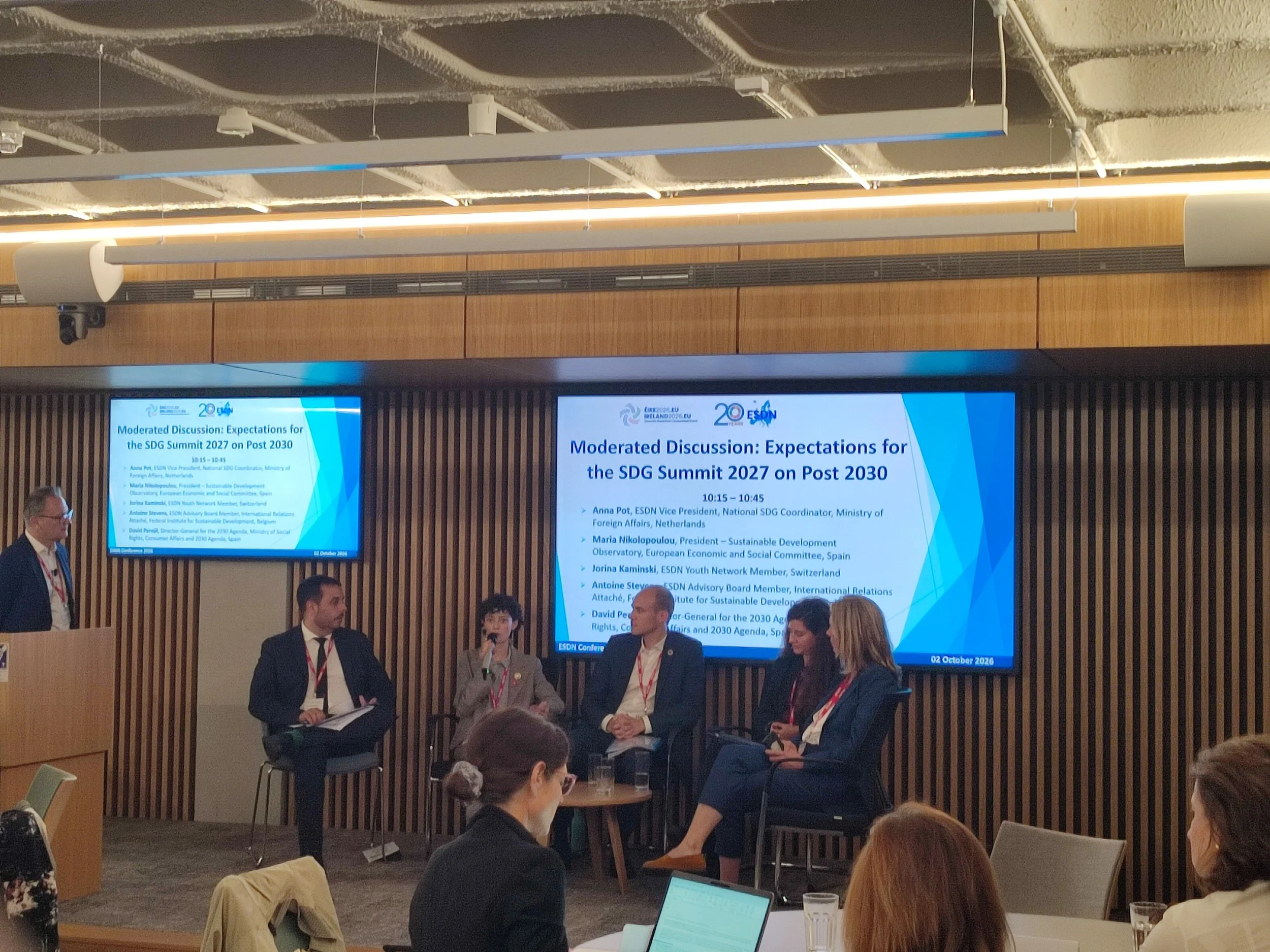
The conference concluded with a moderated discussion on expectations for the 2027 SDG Summit and the future of the SDGs beyond 2030.
Contributions from national SDG coordinators, European institutions, and youth representatives considered how the international sustainable development framework can maintain momentum while responding to emerging challenges.
Discussions reinforced the importance of strengthening multilateral cooperation, maintaining political commitment to the 2030 Agenda, and ensuring that future frameworks build on the lessons and partnerships developed through the SDGs.
Strengthening European Partnerships for Sustainable Development
For SDSN Ireland, participation in the conference provided an important opportunity to contribute to European dialogue and connect Ireland's sustainability experience with emerging policy approaches across the region.
The discussions reflected SDSN Ireland's commitment to fostering collaboration among universities, NGOs, businesses, local authorities, and government to advance practical, research-informed solutions to sustainable development challenges.
Across the conference, one message was particularly clear: environmental security and long-term resilience cannot be achieved through isolated policy interventions. They require integrated approaches that connect climate action, biodiversity, social equity, economic transformation, and meaningful community participation.
As Ireland continues its engagement during the EU Presidency, these conversations provide an important foundation for strengthening partnerships and accelerating progress towards a more sustainable, resilient, and peaceful future.