21–24 September 2026 | Portugal
The All-Island Local Authority Forum, facilitate by Co-operation Ireland and in collaboration with the Sustainable Development Solutions Network (SDSN) Ireland and SDSN Portugal, undertook a four-day study visit to Portugal from 21–24 September 2026. The visit brought together local authority Chief Executive Officers from across the Island of Ireland to explore innovative approaches to sustainable development, climate action, and the localisation of the United Nations Sustainable Development Goals (SDGs).
Centred on the municipalities of Guimarães, Viana do Castelo, and Matosinhos, the programme provided an opportunity to examine how local governments, universities, research institutions, and businesses are working together to develop and implement practical sustainability solutions. Key themes included European Green Capital delivery, coastal and marine sustainability, sustainable tourism, applied research and development (R&D), university–municipality partnerships, and Voluntary Local Reviews (VLRs).
The visit also provided an opportunity to strengthen relationships between Ireland and Portugal with a focus on the localisation of SDG implementation.
Guimarães: University–Municipality Partnerships and European Green Capital
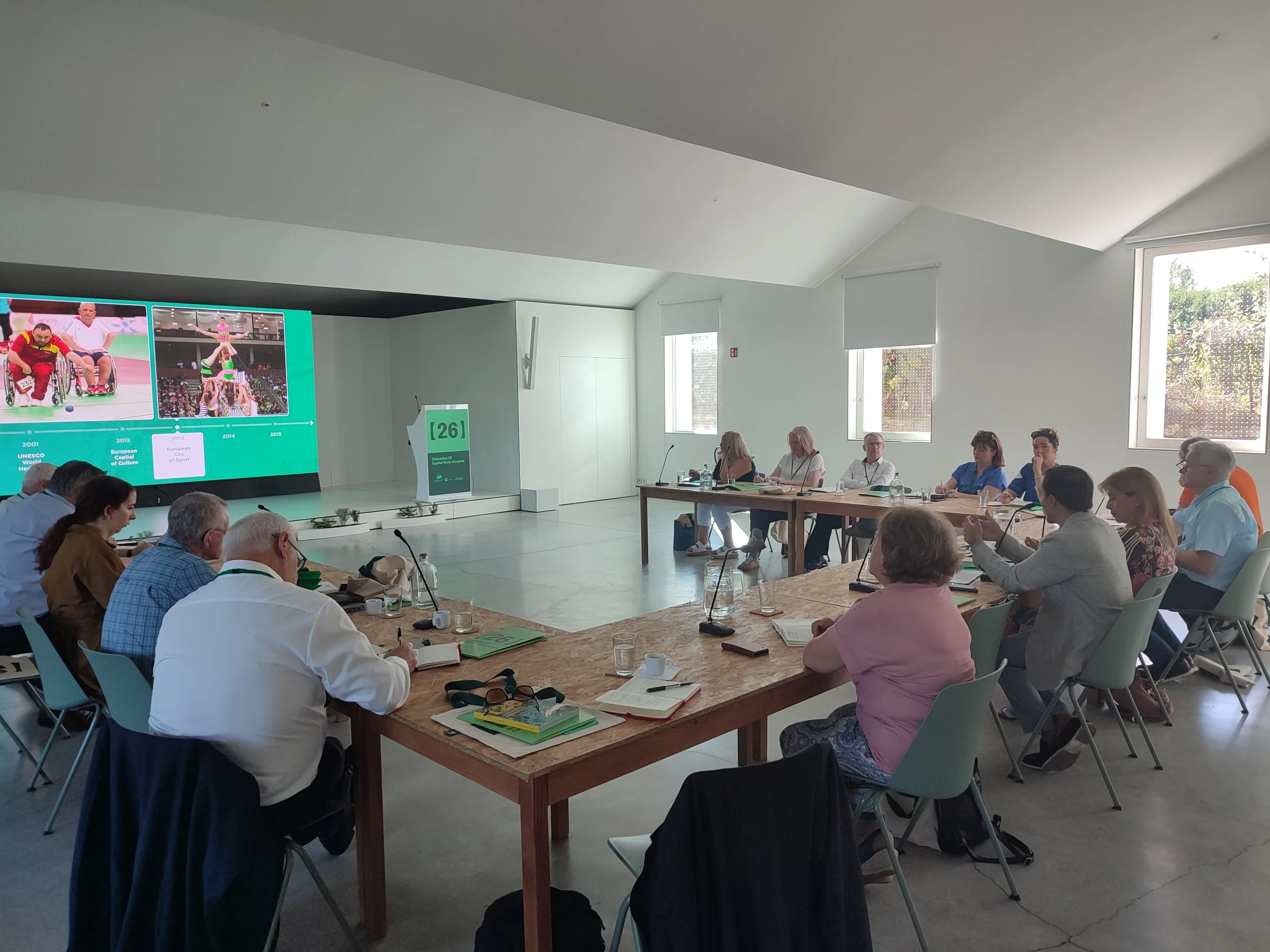
The programme commenced in Guimarães with a formal welcome at the Landscape Laboratory, hosted by its President, Carlos Ribeiro. The Landscape Laboratory provided an important example of how local authorities and universities can collaborate to connect research, education, and applied environmental projects with municipal sustainability priorities.
Participants explored the partnership between Guimarães Municipality and local universities, including opportunities for research-informed decision-making, environmental education, professional training, and practical interventions at the community level.
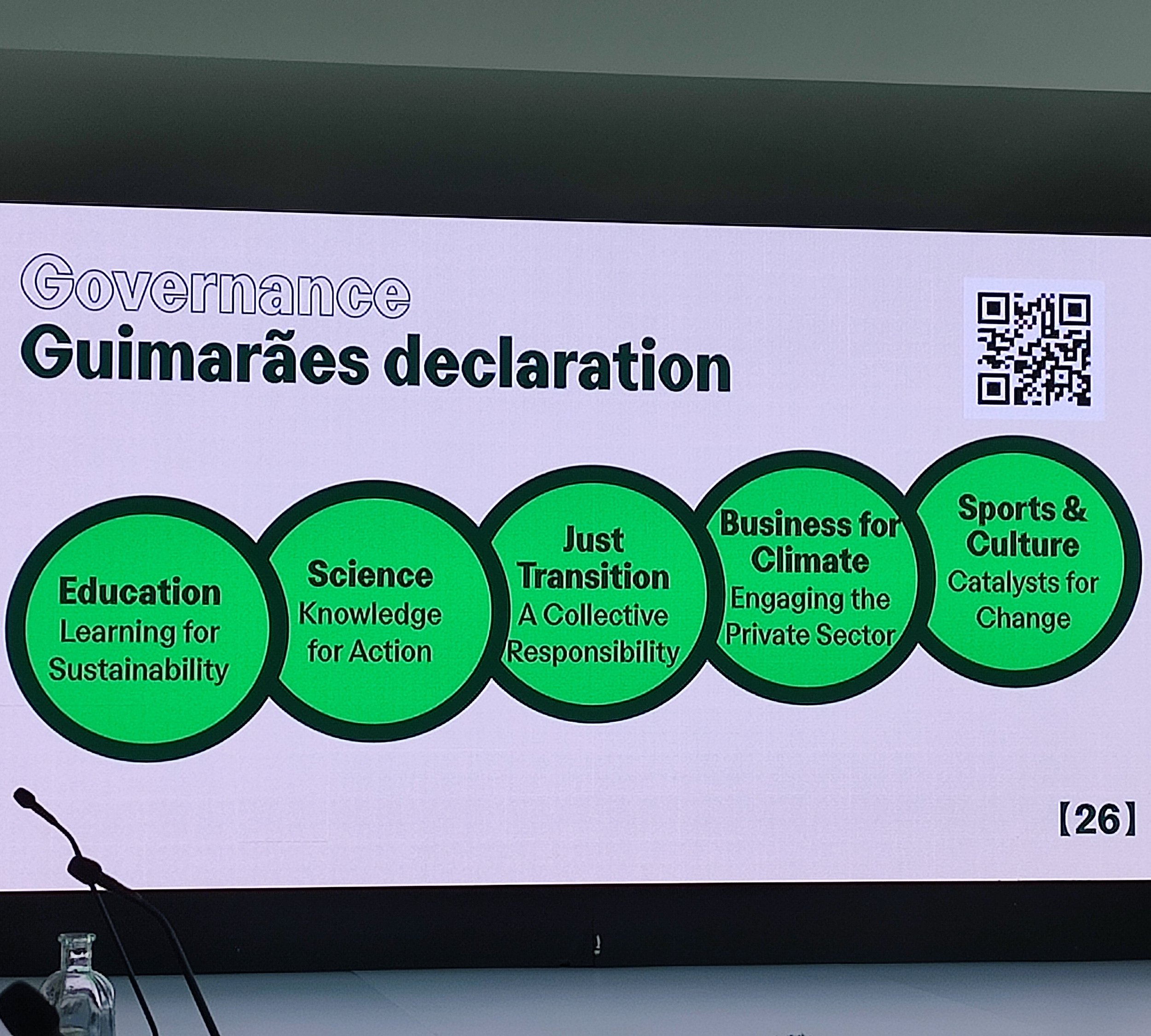
A central focus was Guimarães' experience as European Green Capital, with Isabel Loureiro, General Coordinator of Guimarães 2030, outlining the governance structures, strategic priorities, and delivery frameworks underpinning the city's sustainability ambitions.
Viana do Castelo: Advancing the Sustainable Blue Economy
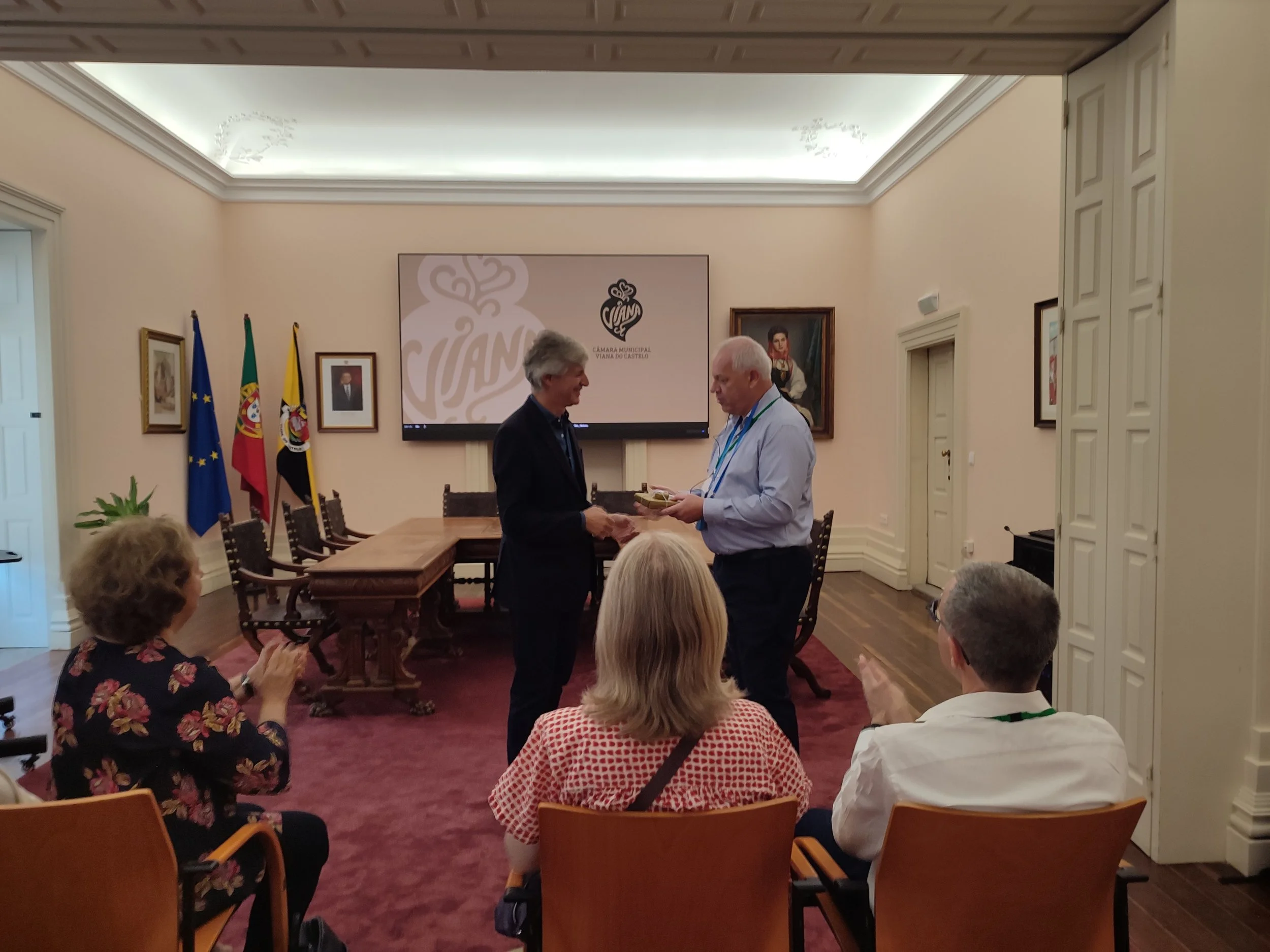
The second major programme destination was Viana do Castelo, where participants were received at the Town Hall by Mayor Luis Nobre before visiting the city's Centro de Mar (Sea Centre) which introduced its history and significance within the municipality's wider development strategy.
Miguel Marques, Coordinator of the Agenda 2030 for the Sea, subsequently presented the Viana do Castelo 2030 Economy of the Sea Agenda. His presentation outlined an integrated approach to coastal and marine sustainability, bringing together marine ecosystem protection, coastal resilience, blue economy innovation, fisheries, renewable energy, sustainable mobility, maritime heritage, culture, and tourism. The programme also included a visit to the Gil Eannes museum ship, providing an opportunity to explore the city's maritime heritage and its relationship with the sea.
A further highlight was a session on sustainable tourism and place-based development at Hotel FeelViana. Hotel owner and director José Sampaio, alongside former Mayor José Maria Costa, discussed the policy framework and development of sea sports as a strategic asset for the municipality. Their case study demonstrated how local identity, natural assets, tourism, and economic development can be brought together within a broader sustainability strategy. It also highlighted the importance of maintaining connections between public policy, private enterprise, and community-based development.
CEiiA: Applied Research and Innovation for Climate-Neutral Cities
The final programme day included a visit to CEiiA, the Engineering and Product Development Centre in Matosinhos and host of SDSN Portugal. Following an introduction by Innovation Director Vladimiro Feliz, participants learned about CEiiA's applied research and development activities supporting the transition towards more sustainable cities. Presentations from the heads of the relevant research units explored two particularly important areas: sustainable mobility and decarbonisation, and digital tools and smart systems for climate-neutral cities.
The programme included an IVS demonstration and an overview of selected technologies, projects, and demonstrators, illustrating how engineering, digital innovation, and applied research can support municipalities in addressing complex sustainability challenges. The visit highlighted the potential for closer collaboration between local authorities, research institutions, and innovation centres to move beyond identifying sustainability challenges towards developing, testing, and scaling practical solutions.
Matosinhos: SDG Localisation and Voluntary Local Reviews
The visit concluded in Matosinhos with a focus on sustainable development as a central component of the city's strategic development.
Following a reception by a municipal councillor, participants heard about the municipality's Sustainable Development Strategy and its Voluntary Local Reviews, which assess progress towards the SDGs at the local level.
The programme also included an exchange on selected municipal projects and the role of universities in supporting local sustainability ambitions. A lunch discussion at Architecture Haus, promoted by the Technical University of Porto and attended by Ricardo Rio, former Mayor of Braga, provided a further opportunity to explore university–municipality partnerships and the contribution of VLRs to local sustainable development.
These discussions reinforced the importance of evidence-informed policymaking, stakeholder engagement, and locally relevant indicators in measuring progress towards the SDGs. VLRs offer an important mechanism for municipalities to assess their achievements, identify remaining challenges, and establish shared priorities for future action.
Strengthening All-Island and International Collaboration
Across the four days, several recurring themes emerged. These included the importance of strong university–municipality partnerships, the value of research and innovation in informing local decision-making, and the need to integrate environmental, social, and economic priorities within long-term development strategies.
The Portuguese examples also demonstrated that successful sustainability initiatives are rarely delivered by local government acting alone. Rather, they depend on sustained collaboration among universities, businesses, research centres, civil society, and communities.
For the All-Island Local Authority Forum, these experiences provided valuable opportunities to reflect on how comparable approaches might inform sustainability ambitions across local authorities in Ireland, North and South. In particular, the discussions around climate-neutral cities, coastal resilience, sustainable tourism, and Voluntary Local Reviews offer promising areas for further knowledge exchange.
For SDSN Ireland, the study visit represents an important contribution to strengthening international partnerships and supporting the localisation of the SDGs. Building on the relationship with SDSN Portugal, there is considerable potential to continue sharing knowledge, connecting expertise, and identifying opportunities for collaborative initiatives between the two networks.
Ultimately, the visit reinforced a central principle of the Sustainable Development Goals: achieving meaningful progress requires partnerships that connect knowledge with action. By bringing together local government, higher education, and innovation partners, the All-Island Local Authority Forum and SDSN networks can help translate international sustainability ambitions into practical solutions for communities across Ireland and beyond.